
2A’s tax rate increase will hurt affordability. 2A will make housing more costly. 2A funds locked in the Street Fund can’t be redirected to other needs in an emergency. For the past decade, the city has ended each year with a multimillion-dollar surplus. Centennial started 2026 with over $170 million in the bank.
City sales and use tax
Percent increase
Estimated per capita cost
Two city tax rates will increase: the sales tax you pay at the register and online, plus the use tax paid on building materials and motor vehicles.
2A raises Centennial’s tax rate from 2.5% to 3.5%, a 40% increase.
Centennial’s current 2.5% sales tax is part of the 6.75% total sales tax you pay on purchases.
If 2A and other proposed taxes pass (such as the Front Range Train), your total sales tax rate could exceed 8%.
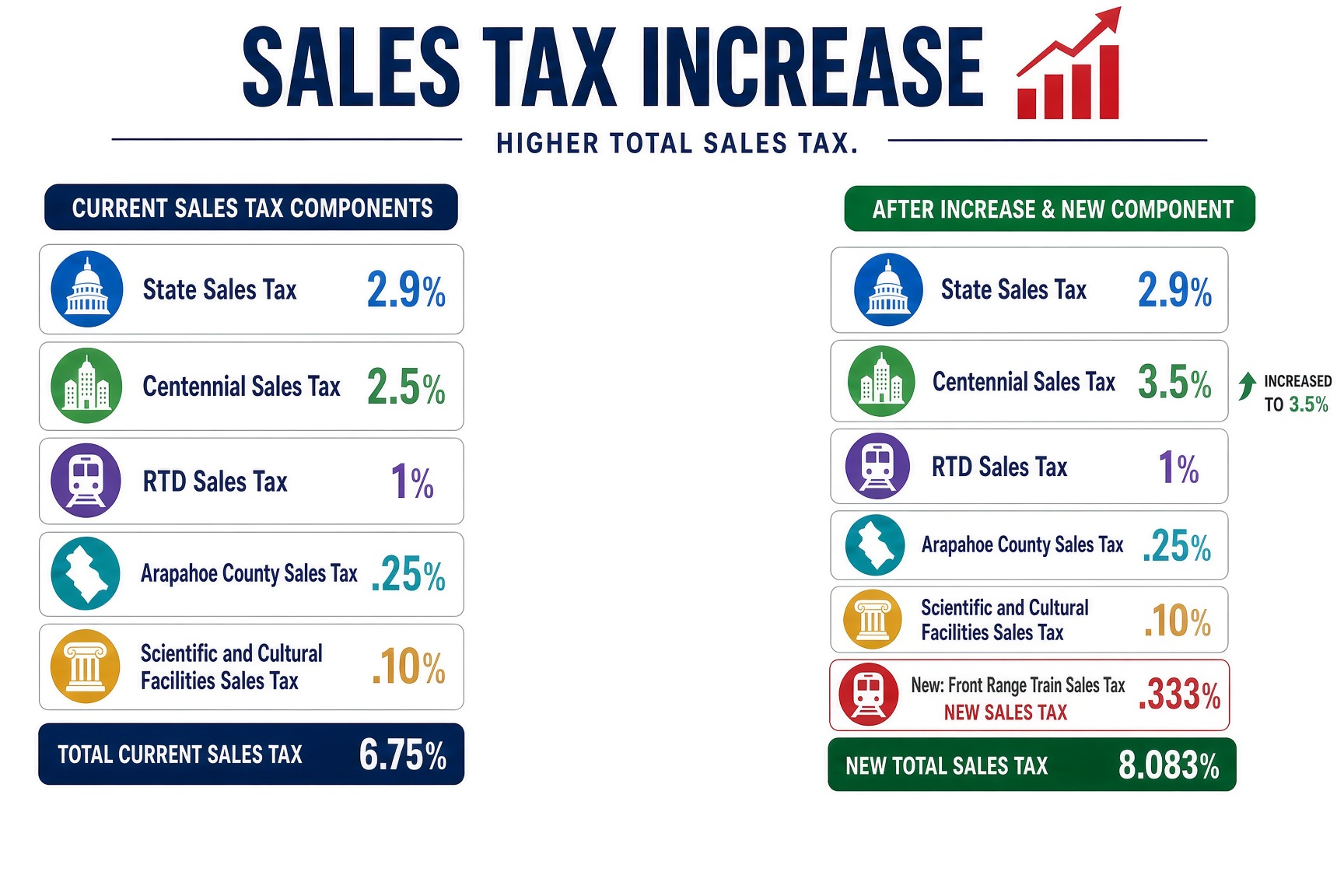
While visitors and commuters will pay some of the tax, residents will pay most of it with every purchase of clothing, household goods, restaurant meals, cars, furniture, and other taxable goods.
The two tax increases in 2A
A per capita cost estimates the potential impact on you by dividing the expected $27 million in additional annual revenue by the city’s population of about 108,000.
Predicted additional annual revenue if 2A passes.
Approximate city population used for a per-capita estimate.
The estimated per capita cost to Centennial residents each year.
2A could add ~$1000 to your tax bill for a family of four.
For a car purchase or other big-dollar items like furniture, the impact will be much higher.
Lower-wage households, people living paycheck to paycheck, and residents on a fixed income feel a sales-tax increase first.
2A makes Centennial less affordable.
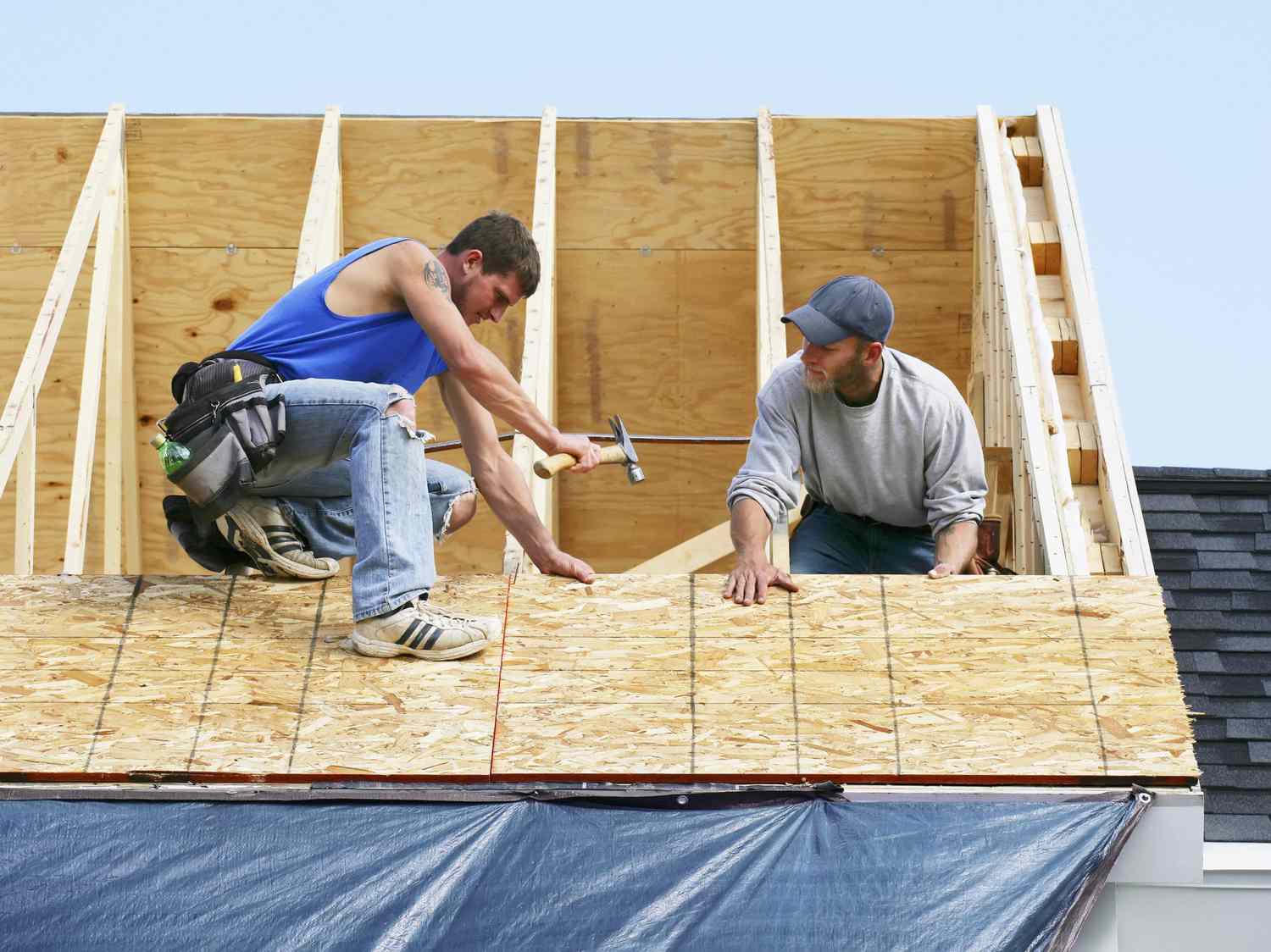
2A is also an increase in the construction use tax. It applies to construction materials used when you remodel your kitchen, build your deck, or repair your hail-damaged roof.
Developers and builders constructing single-family homes and apartment complexes pay it, with some of that cost showing up in higher housing prices and higher rent.
2A’s tax rate increase will hurt affordability. A 40% increase in the city construction use tax rate makes housing more costly.
For the last decade, the city ended each year with a multimillion-dollar surplus. (Explore details on the Colorado State Auditor’s website.)
These are recent examples:
Centennial started 2026 with more than $170 million in cash, cash equivalents, and investments
Some of that cash is already committed to projects, including streets. The city has always moved additional money from the General Fund to the Street Fund.
2A would add a permanent tax whose receipts are locked to streets. In an emergency, funds locked into the Street Fund could not be reallocated to other needs. (During COVID, Street Fund projects were postponed, with some money reallocated to other operations.)
The Street Fund receives about $15 million in revenue from the Motor Vehicle Use Tax, the Highway Users Tax Fund, and several other sources. These revenues are required to be spent on roads.
There is always a gap between the initial funding and desired expenditures. City Council always adds additional funds for street projects.
A low city tax rate is a competitive advantage for businesses and a break for residents. It attracts businesses that want their employees to enjoy a high standard of living. “Other cities tax more” is not a reason to raise rates. Centennial is a unique, well-managed city, not a follower.
According to the April 14th City Council Workshop, our roads are, on average, at the lower end of the city’s “Very Good” classification.
The Centennial road classifications:
2A’s tax rate increase will hurt affordability and housing costs. The city is not facing a funding emergency.
Share the facts. Talk to neighbors.
The case in seven lines
Paid for by an independent voter group. Not a city publication.